TriggerPoint Grid Foam Roller
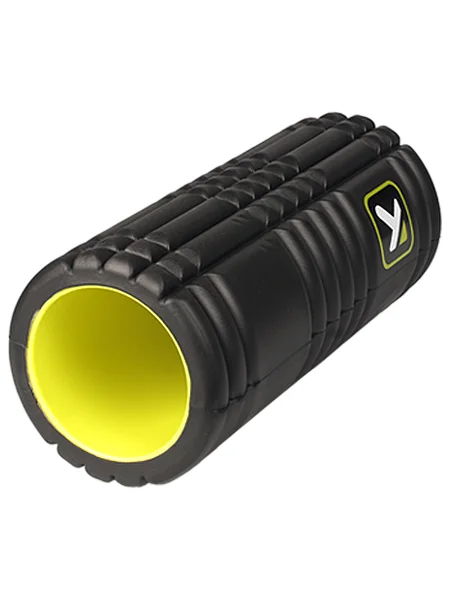
The TriggerPoint Grid is the foam roller you’ve seen in every legitimate weight room. The multi-density surface — flat sections, raised ridges, and channels — was designed to mimic the feel of a massage therapist’s hands and fingers, breaking up muscle tightness in a way that smooth foam rollers can’t. It’s not the cheapest roller on Amazon, but it’s the one strength coaches actually recommend, and the one that’s been in continuous production for over a decade because nothing has improved on the design.
For a serious high school recruit, this is the cheapest single piece of recovery equipment you’ll buy that genuinely matters. Five to ten minutes of foam rolling before a workout and after a throwing session changes how you feel the next day — quads, IT bands, lats, thoracic spine, calves. The Grid is firm enough to actually break up dense tissue (cheaper foam rollers are too soft to do real work on big muscle groups) but not so aggressive that you’ll bruise yourself learning how to use it. And the hollow plastic core means it holds its shape for years instead of compressing into a soft lump like cheap EVA foam rollers.
Two things to know before you buy. First: get the 13″ size, not the 26″. Amazon sells both. The 13″ Grid is the travel-friendly version that fits in a gear bag and works for everything except rolling out your full back at once. The 26″ is meant for full-back work and physical therapy clinics — overkill for individual home use, and harder to store. Second: foam rolling is a skill. The first few sessions will feel uncomfortable in ways you don’t expect. Stick with it for two weeks before judging — by then you’ll know which spots actually need work and which ones don’t, and the discomfort settles into something productive.
It earns the Edge Score of 91 because almost nothing else on Prism delivers this much value for this little money. At $34.99 for a tool that lasts five-plus years and does work that genuinely matters for arm health, leg recovery, and mobility — there’s no scenario where a serious athlete shouldn’t own one. The only thing keeping it from a higher score is that foam rolling itself is a means to an end (mobility, recovery) rather than a training stimulus that directly improves performance.